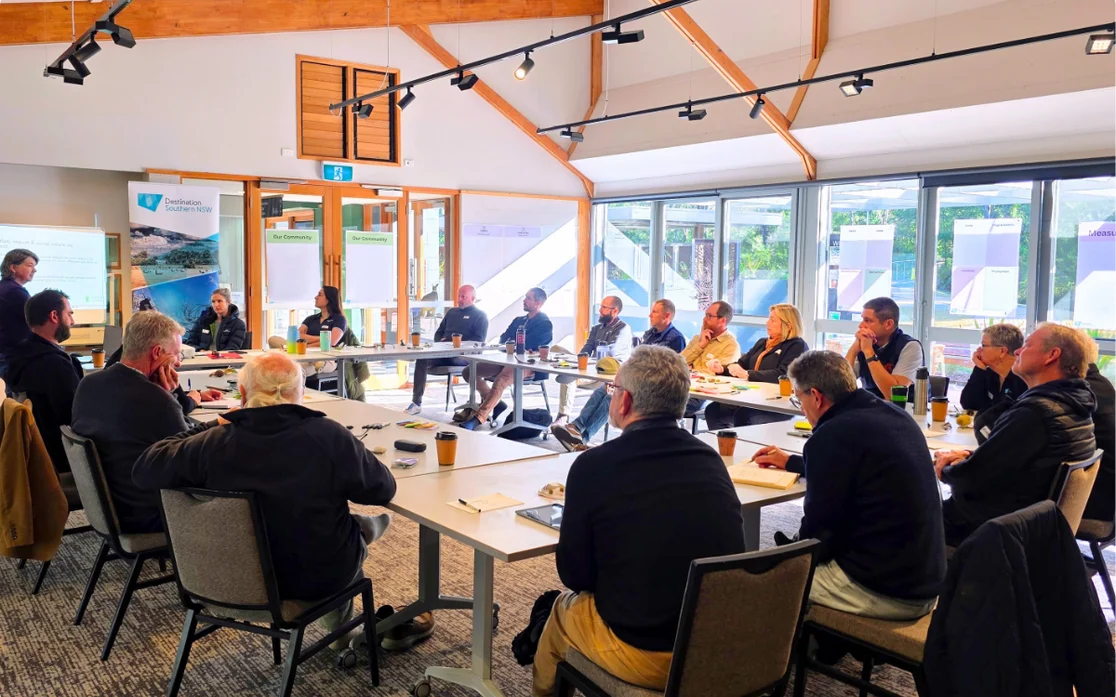
Event Readiness: Facilities, Services, and Collaboration
Being event-ready is the key to attracting and retaining business event clients by ensuring that your venue, service, or product not only meets its purpose but also exceeds organiser expectations at every stage of planning and delivery.
Across the Southern NSW region, operators are successfully competing for conferences, corporate retreats, incentive programs, and community events by focusing on quality facilities, dependable services, and collaborative partnerships. For many organisers, the choice of venue comes down to a combination of practical capabilities (space, AV, catering) and confidence in delivery (professionalism, flexibility, and problem-solving).
When assessing your readiness, it’s essential to think beyond your own four walls:
- Are your facilities flexible enough to accommodate different event types and sizes?
- Is your technology reliable, current, and supported by skilled staff?
- Have you considered accessibility and comfort for all delegates?
- Do you have partnerships with accommodation, catering, transport, and activity providers to offer a complete solution?
This section outlines the steps to prepare your venue, services, and systems for delivering professional events. It also provides practical steps, detailed considerations, and collaborative approaches to ensure your offering stands out in the competitive business events market.
Explore the resources below to discover resources to help you become event-ready.
In this section
Venue Preparation
A well-prepared venue gives organisers confidence that their event will run smoothly from start to finish. This means more than simply providing a space; it’s about creating an adaptable, professional environment that meets the diverse needs of business events.
Key considerations:
- Layout flexibility – Offer configurations such as cabaret, theatre, classroom, U-shape, and boardroom. Ensure set-up and pack-down times are factored into hire agreements.
- Lighting – Provide adjustable, dimmable lighting suitable for presentations, networking, and dining.
- Climate control – Maintain consistent temperature and ventilation across all spaces.
- Information for organisers – Supply clear floor plans, capacity charts, and professional images that can be included in event proposals.
- Cleanliness and maintenance – Maintain a spotless venue with timely repairs to fixtures, furnishings, and equipment.
Example: A conference organiser shortlists venues based on how easily they can access floor plans and technical specifications. Venues that provide this upfront, in a professional format, often make the final cut over those that do not.
Technology & AV
Reliable technology is non-negotiable for successful events. Poor sound quality, unclear visuals, or an unstable internet connection can damage the delegate experience and the organiser’s reputation.
Key considerations:
- Wi-Fi – Provide secure, high-speed connectivity suitable for multiple devices and live streaming.
- Audio-visual – Offer high-resolution projectors, large LED screens, microphones, and quality sound systems.
- Hybrid capability – Equip spaces for live video conferencing with high-quality cameras and audio capture.
- Technical support – Ensure an experienced AV technician is available during set-up and event delivery.
- Redundancy – Keep backup equipment on site, including spare microphones, cables, and power sources.
Example: A hybrid corporate meeting in regional NSW runs seamlessly because the venue offers both in-house AV and an on-call technician, ensuring rapid troubleshooting if issues arise.
Accessibility & Comfort
Accessibility and comfort are essential for creating an inclusive event that welcomes all delegates. Going beyond compliance can set your venue or service apart and ensure repeat bookings.
Key considerations:
- Physical access – Step-free entry to all event spaces, wide doorways, ramps, and accessible bathrooms.
- Assistive technology – Provide hearing loops, captioning, or other support for delegates with diverse sensory needs.
- Wayfinding – Use clear, high-contrast signage, with multilingual or icon-based options where appropriate.
- Comfort – Offer ergonomic seating, adjustable climate control, and quiet breakout areas.
- Cultural inclusivity – Acknowledge diversity in delegate needs, including dietary requirements, prayer rooms, and gender-neutral facilities.
Example: A venue secures repeat bookings from an industry association after exceeding the minimum accessibility requirements by providing clear online accessibility information before the event.
Collaboration
Business events rely on a network of suppliers and services. A venue or operator that can facilitate these connections adds value for organisers.
Key considerations:
- Accommodation – Partner with hotels, motels, and short-stay operators for delegate packages.
- Transport – Arrange shuttle services, airport transfers, and group transport options.
- Local suppliers – Connect organisers with caterers, florists, and décor providers familiar with event requirements.
- Tourism experiences – Collaborate with local operators to create pre- or post-event packages that enhance the delegate experience.
- Destination support – Work with your local council, Destination Southern NSW, or Destination NSW for support with marketing, bid development, permits, and event promotion.
Example: A regional venue secures a large conference by offering a single point of contact who arranges venue hire, accommodation, catering, and sightseeing tours, saving the organiser time and effort.
Practical Steps to Event-Readiness
Use this checklist, adapted from Destination NSW’s Business Events Toolkit and related templates, to assess your readiness and to determine what event organisers are seeking in their event:
- Presentation – Ensure all spaces are clean, well-maintained, and professionally presented.
- Flexibility – Offer multiple room layouts and provide accurate specifications.
- Technology – Reliable Wi-Fi and AV equipment, with technical support and backup systems in place.
- Accessibility – Provide step-free access, accessible bathrooms, and inclusive amenities for all delegates.
- Comfort – Offer climate control, comfortable seating, and quiet breakout areas.
- Catering – Deliver or partner with providers who can meet dietary and cultural needs.
- Accommodation – Collaborate with local providers to create delegate packages and room allocations.
- Transport – Provide or recommend reliable transfer options, consider group travel and airport connections.
- Staffing – Engage event coordinators, hospitality staff, and AV technicians to support delivery.
- Sustainability – Consider waste reduction, local sourcing, energy efficiency, and transparent reporting of outcomes where possible.
Resources
Business Events Toolkit – Destination NSW
A comprehensive guide supporting venues, destinations, and organisers in building business event capability. It explains how business events differ from leisure tourism, identifies client types and market segments, and outlines delegate behaviours and trends. The Toolkit also covers marketing, bidding, proposal development, delegate boosting, sustainability, and accessibility. With checklists, case studies, and practical tips, it is a step-by-step reference for attracting and delivering successful events.
Request for Proposal Response Template – Business Events NSW
The RFP Response Template provides a professional structure for responding to event organiser Requests for Proposal (RFPs). It guides operators through presenting a competitive bid, covering destination or venue profiles, capacities, technical services, accommodation, transport, and local suppliers. It also highlights how to showcase unique experiences, environmental credentials, and community or cultural elements, supported by quality imagery and testimonials. The resource helps regional operators submit responses that are persuasive, tailored, and aligned with industry standards.
Client Brief Template – Business Events NSW
The Client Brief Template is a structured tool to help capture all essential information when taking enquiries. It prompts organisers for client background, event specifics, delegate profiles, accommodation, catering, technical requirements, and social event options. It also considers destination features such as partner programs, team-building activities, cultural experiences, and local attractions. By systematically recording these details, operators can prepare proposals that closely align with client objectives and minimise miscommunication.
These tools are available from Destination NSW’s Business Events NSW platform.
Phase
Becoming Event-Ready
← Back to phase
Section
Getting Started
You are here