
Advocacy

Image: Richard Everson, General Manger, Destionation Southern NSW
Destination Southern NSW advocates for policies, programs, and investments that strengthen the visitor economy across Southern NSW. Our advocacy work ensures that the interests of regional tourism operators, councils, and communities are represented in decision-making at state and national levels.
As one of seven Destination Networks in regional NSW, Destination Southern NSW plays a coordinating role, bringing together industry insights, local experience, and data-driven evidence to inform planning and policy reform. We work collaboratively with government agencies, tourism organisations, operators, peak bodies, and regional partners to identify barriers to growth and propose practical, place-based solutions.
Advocacy is a key part of how we deliver on our mission to grow a sustainable, resilient, and inclusive visitor economy. Through submissions, consultations, and cross-sector partnerships, Destination Southern NSW helps shape policies that enable regional businesses to diversify, invest, and thrive.
“Our advocacy is grounded in consultation with industry, local government, and communities, ensuring that regional voices are heard where it matters most.”
Richard Everson | General Manager, Destination Southern NSW
Advocacy Projects
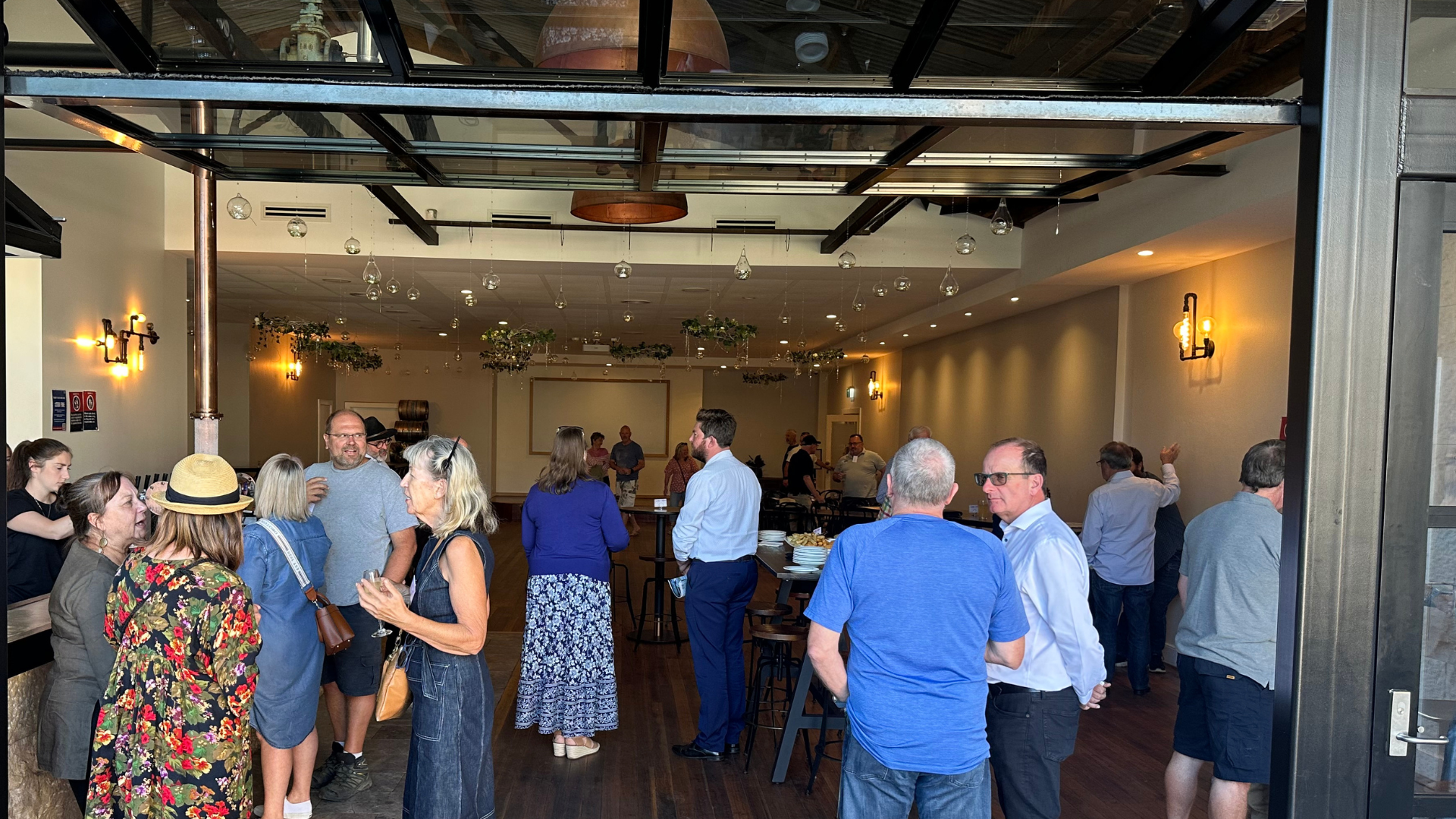
Southern Yarns, Alpine Hotel Cooma
Southern Yarns: Industry Shaping Advocacy
Southern Yarns is Destination Southern NSW’s quarterly networking series, held across different LGAs to bring tourism operators, councils, and industry partners together for open conversations about local challenges and opportunities. These informal events play a vital role in shaping Destination Southern NSW’s advocacy priorities, allowing staff and board members to hear directly from those working in the visitor economy. Insights gathered at each Southern Yarns event inform submissions, policy feedback, and regional collaboration efforts, ensuring that advocacy is grounded in the real experiences and needs of Southern NSW operators.
Read more about our Southern Yarns events including topics raised here.
On-Site Accommodation Manager Licensing
December 2025 update – Destination Southern is advocating for urgent reforms to NSW Fair Trading licensing requirements that mandate on-site holiday accommodation managers to hold a Class 1 Real Estate Licence, including completion of the Certificate IV in Real Estate Practice (CPP41419). These requirements were designed for real estate sales and leasing, not tourism or hospitality, and are causing significant disruption to management rights businesses across Southern NSW.
Key actions include:
- Keeping operators informed and elevating regional impacts – Destination Southern has been engaging with affected operators (Tathra, Merimbula and surrounding areas) to understand business closures, workforce challenges, and impacts on accommodation availability. We have gathered case studies and communicated these impacts to government and industry partners.
- Coordinating advocacy with DNSW, Destination Networks and industry bodies – We have raised the issue with Destination NSW, briefed the Destination Networks, and shared evidence on closures, business unsaleability, and declining on-site management capacity. Destination Southern also supported escalation to ASTRA and worked with the NSW Tourism Association, which has now included the issue in its formal advocacy agenda.
- Engaging policy and regulatory stakeholders – Destination Southern has engaged with the Regional Hub at Destination NSW and ensured policy teams are aware of the issue. We have also encouraged further engagement with NSW Fair Trading, the NSW Small Business Commissioner, and Members of Parliament to highlight the unintended consequences of the current licensing model.
- Advocating for fit-for-purpose licensing pathways – Destination Southern is promoting the need for a licensing model that reflects the reality of on-site holiday accommodation management, hospitality, guest services and property care, rather than real estate sales. We continue to outline the operational, financial and visitor experience impacts associated with the current regime.
Outcomes
Recent developments indicate growing recognition of the issue:
-
The NSW Tourism Association has commenced formal advocacy, including raising the issue in its statewide newsletter and preparing a case for government.
-
Destination NSW has acknowledged the issue, and its policy team is now aware and considering next steps.
-
Industry bodies such as ASTRA have been engaged, offering an additional pathway for collective advocacy.
-
Evidence of business closures and reduced accommodation capacity has now been formally captured and communicated, ensuring the issue is visible across government and industry forums.
Destination Southern will continue working with operators, government and peak bodies to advocate for a licensing approach that protects consumer standards while enabling sustainable operation and succession of on-site accommodation businesses across Southern NSW.
E-bike Advocacy
December 2025 update
Destination Southern has been actively advocating to ensure emerging e-bike regulations support both safety outcomes and the sustainability of the visitor economy.
Mountain biking and e-bike experiences are a growing part of Southern NSW’s tourism offering. It is essential that regulatory settings reflect how these experiences operate in regional areas and do not unintentionally impact businesses, investment and visitor access.
Key actions
Keeping operators informed and engaged
We have provided regular updates through eNews, LinkedIn and direct communication to ensure operators understand proposed regulatory changes, their potential impacts, and opportunities to contribute. This work forms part of our broader MTB industry development across the region. We also supported the promotion of the Outdoors NSW & ACT survey to gather evidence on operational, financial and workforce impacts.
Advocating for practical certification pathways
In response to industry concerns, Destination Southern worked with Destination NSW and other Destination Networks to support advocacy led by Bicycle Industries Australia. This included coordinating data and case studies to demonstrate the impact of proposed certification timeframes. While safety remains critical, our advocacy highlighted that limited transition periods could force operators to retire entire hire fleets without access to compliant replacements, placing significant pressure on businesses and regional tourism assets.
Engaging in policy and regulatory processes
At a national level, we supported industry advocacy to address unsafe imports and strengthen safety standards. This contributed to the reinstatement of the global EN15194 e-bike standard. At a state level, we lodged a submission to Transport for NSW regarding proposed restrictions on e-bikes and e-micromobility devices on public transport, emphasising the importance of maintaining access for compliant e-bikes that support trail-based tourism and visitor movement.
Representing regional industry perspectives
We have worked closely with Destination NSW, Outdoors NSW & ACT, Bicycle Industries Australia and regional operators to ensure real-world impacts are reflected in policy discussions. This includes providing data on fleet sizes, operational requirements and potential business disruption and supporting coordinated engagement with government.
Industry update: NSW e-micromobility exemption for hire operators
In December 2025, Outdoors NSW & ACT (ONSWACT) announced an important regulatory outcome following coordinated advocacy with Bicycle Industries Australia, the Caravan & Camping Industry Association of NSW and the NSW Tourism Association.
The NSW Government has confirmed an exemption for hire, rental and lease businesses under the new lithium-ion battery-powered e-micromobility safety regulations.
This means that eligible e-micromobility vehicles used exclusively for hire, lease or rent, and purchased before 1 February 2026, are exempt from the testing, certification and marking requirements that would otherwise apply.
The exemption covers:
- e-bikes and e-bike batteries
- electric scooters and self-balancing scooters
- electric skateboards
- e-micromobility batteries
To be eligible, fleets must:
- be used exclusively for hire, rental or lease
- have been purchased before 1 February 2026
- meet existing NSW product standards
No application is required, although evidence of purchase and compliance may be requested.
From 1 February 2026, all e-micromobility devices sold in NSW, including second-hand and ex-hire equipment, must meet full certification requirements. Penalties apply for non-compliance, and hire businesses must continue to meet information standard requirements when supplying equipment to customers.
This outcome provides important certainty for operators and reflects the value of coordinated, industry-led advocacy.
Outcomes
Recent developments reflect positive progress toward a more balanced and consistent regulatory approach:
- Reinstatement of the global EN15194 standard, improving safety while supporting reputable suppliers.
- NSW Government’s commitment to stronger and clearer NSW e-bike safety rules, including defined standards and limits.
- National alignment toward a more consistent regulatory framework, with ongoing consultation
- Extension of certification transition timeframes, allowing businesses to plan and adapt.
- Exemption for hire and rental operators, providing immediate relief and certainty for existing fleets
These outcomes support a safer operating environment while helping to protect Southern NSW’s growing MTB tourism sector and the businesses that rely on it.
Proposed Changes to Default Speed Limits in Regional Areas and Unsealed Roads
In October 2025, Destination Southern NSW made a submission to the Department of Infrastructure, Transport, Regional Development, Communications, Sport and the Arts to inform a final Regulatory Impact Analysis about proposed changes to the Australian Road Rules.
Destination Southern NSW supports the goal of improving safety on regional and unsealed roads, but has raised concerns about the potential impact of reduced default speed limits on the visitor economy. With over 4.4 million visitors contributing $1.9 billion annually across the region, accessibility and travel time are critical to sustaining tourism and small business viability.
The submission recommended that any policy changes be tailored to the realities of rural and tourism-reliant areas, supported by clear visitor communication, local road assessments, and targeted funding for councils and Destination Networks.
The submission advocates for a balanced approach that enhances road safety while preserving access, competitiveness, and visitor experience across Southern NSW.
Community Improvement Districts Amendment Regulation 2025
In September 2025, Destination Southern NSW made a submission to the NSW Department of Transport in response to consultation on the Community Improvement Districts Amendment Regulation 2025.
The submission welcomed the introduction of a clear framework to support place-based, business-led partnerships and outlined how the Regulation could be strengthened to better support the NSW Visitor Economy Strategy 2035. Destination Southern NSW recommended that tourism and visitor economy growth be recognised as eligible purposes for Community Improvement Districts (CIDs), with provisions allowing levy funds to support initiatives such as destination marketing, events, signage, and precinct activation.
The submission also proposed that Destination Networks be permitted to act as CID partners or delivery agents, particularly where projects enhance place identity, visitor experience, and local economic resilience. With these refinements, CIDs could become a powerful tool for driving sustainable, tourism-focused economic development across regional NSW.
Queanbeyan-Palarang’s Draft Operational Plan and Delivery Program 2025-29
In June 2025, Destination Southern NSW made a submission in response to a feedback request for Queanbeyan-Palarang’s Draft Operational Plan and Delivery Program 2025-29.
Destination Southern NSW commended Queanbeyan–Palerang Regional Council (QPRC) on its comprehensive draft while identifying opportunities to strengthen tourism outcomes. The submission encouraged Council to recognise the visitor economy as a key driver of regional prosperity, embed alignment with the Destination Southern NSW Destination Management Plan and Destination NSW’s Visitor Economy Strategy 2030, and include measurable tourism performance indicators. Destination Southern NSW also recommended formalising collaboration between Council and Destination Southern NSW to enhance alignment, leverage funding, and advance shared goals in sustainable and inclusive tourism development.
HumeLink East Social Impact Management Plan
In May 2025, Destination Southern made a submission in response to the Draft HumeLink East Social Impact Management Plan (SIMP).
Destination Southern acknowledged the project team’s strong engagement to date while identifying opportunities to better align the SIMP with long-term tourism priorities across Yass Valley, Hilltops, Upper Lachlan, and Goulburn Mulwaree. The submission outlined risks relating to accommodation displacement and workforce pressures during construction, and encouraged more defined mitigation measures to safeguard peak visitor periods and community events. It also recommended establishing clearer tourism-aligned investment pathways, exploring post-construction reuse of worker accommodation for tourism purposes, and introducing robust monitoring indicators to track tourism impacts over time. Destination Southern emphasised the importance of ongoing collaboration with councils, tourism operators, and regional partners to ensure the project delivers meaningful and enduring benefits for the Southern NSW visitor economy.
South East and Tablelands Strategic Regional Integrated Transport Plan
In February 2025, Destination Southern NSW made a submission to Transport for NSW on the Draft South East and Tablelands Strategic Regional Integrated Transport Plan (SRITP), which sets a 20-year vision for transport across the region.
The submission commended the Plan’s focus on integrated transport and regional connectivity, while highlighting the need for stronger recognition of the visitor economy as a key driver of economic growth. Destination Southern NSW recommended explicit alignment with the Visitor Economy Strategy 2030 and the Southern NSW Destination Management Plan, improved ACT–Sydney rail connectivity, investment in EV charging infrastructure, and the inclusion of rail trails as vital tourism and recreation assets.
The submission also emphasised the importance of addressing workforce mobility, road resilience, and redundancy planning for critical visitor access routes such as the King’s and Snowy Mountains highways. These measures will ensure the Plan supports both community access and the long-term sustainability of the visitor economy.
Wallaroo Solar Farm Submission
In 2024, a development application was lodged for the proposed Wallaroo Solar Farm, a 100 MW solar energy project with a 45 MW / 90 MWh battery storage facility in the Yass Valley. Destination Southern NSW provided a submission to the Independent Planning Commission to ensure the tourism value of the Wallaroo and Hills of Hall region was recognised in the assessment process. The submission outlined the importance of the area’s wineries, cellar doors, accommodation, and cycling routes to the regional visitor economy, and encouraged consideration of tourism-compatible community benefits, such as EV charging infrastructure and local investment through a community enhancement fund. The project is currently under court appeal.